Reality Signal
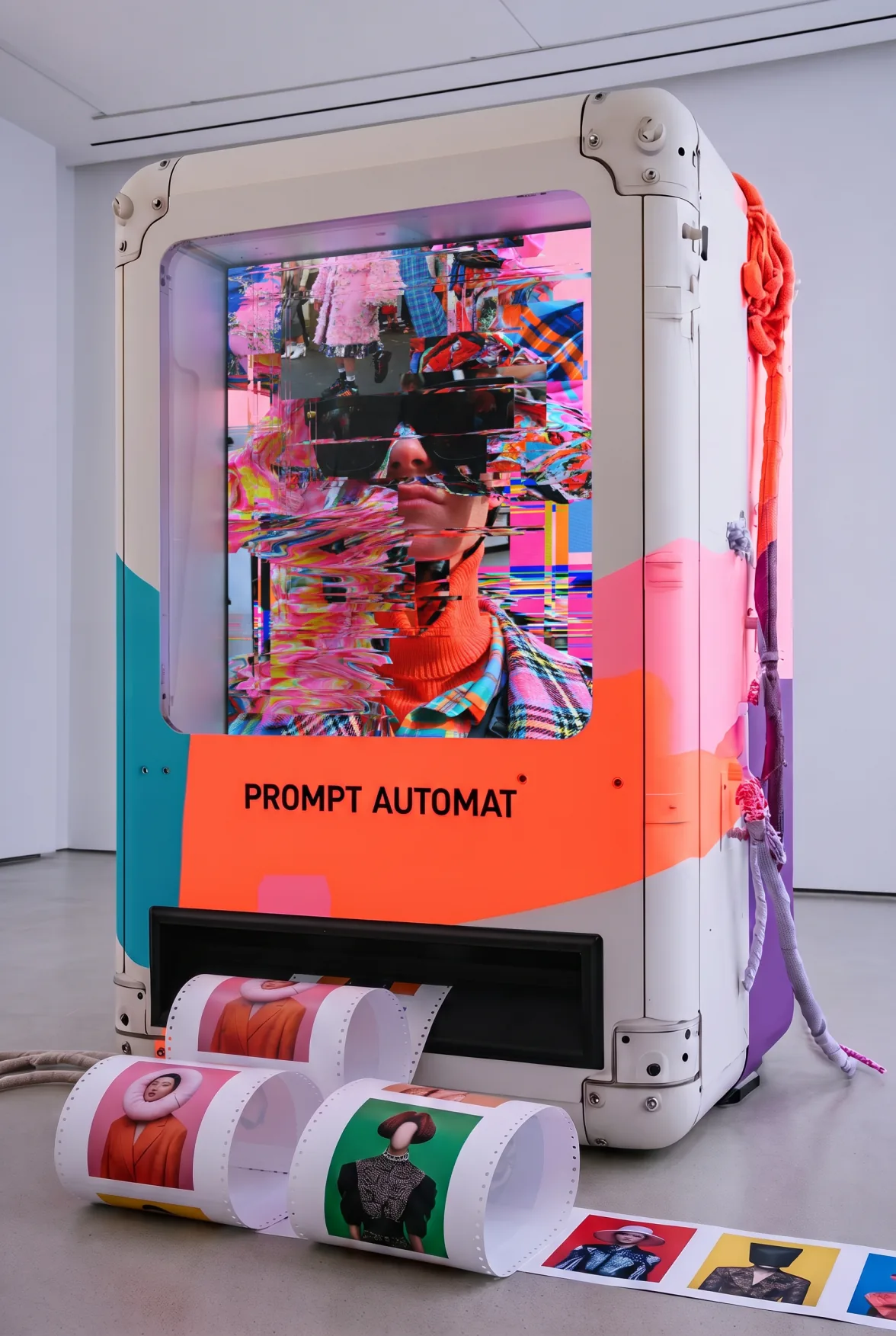
Artwork 04 · Limitless / Lost in Possibility
What happens when there is always another version?
Generative AI can help people explore more ideas. But more options for each individual do not necessarily mean more diversity across people’s work as a whole.
The research
3.67 vs 1.85
Average number of ideas tried – with vs without generative AI
What is known
In a randomised field experiment with professional designers, participants using generative AI during ideation tried 3.67 ideas on average, compared with 1.85 without it. They also reported greater cognitive stimulation.
A separate meta-analysis of 19 studies found a small average tendency for AI-assisted creative outputs to be more semantically similar across people. The effect varied by task and was strongest in idea generation.
The two findings do not contradict each other. An individual may explore more possibilities, while people as a group arrive at more similar results.
What the research does not show
The field experiment found no statistically significant difference in reported choice overload. Research on choice overload identifies conditions that make it more likely: complex options, a difficult task, uncertain preferences and an unclear decision goal. More output alone is therefore not proof of overload.
The meta-analysis does not establish that all AI-generated images look alike or that people become less creative. Evidence specifically for visual art and design was limited to two studies; their pooled result was not statistically significant.
Open question
When there is always another version, how different is the next one?
Sources
- Information Systems ResearchThe Double-Edged Roles of Generative AI in the Creative Process: Experiments on Design Work, 2025.Read the source (opens in a new tab)
- Journal of Consumer PsychologyChoice Overload: A Conceptual Review and Meta-Analysis, 2015.Read the source (opens in a new tab)
- de Rooij and Biskjaer, Behaviour & Information TechnologyDoes generative AI make us think alike? A systematic review and meta-analysis of homogenization effects in human–AI co-creation, 2026.Read the source (opens in a new tab)
Stands beside one artwork
The machine produces a continuous stream of image variations. Beside this work, the research asks when more options help us explore, when choosing becomes difficult, and whether another version opens up a different idea.